

What is Zite Database?
Zite Database is a no-code database that combines the flexibility of a database with the familiarity of a spreadsheet. It lets you store, organize, and manage data from your forms and other tools without writing code. By connecting Fillout to Zite Database, you can:- Organize submissions across multiple tables
- Combine responses from multiple forms into one centralized database
- Create different views of your data without changing the original records
- Pre-fill forms with existing database records to save time and improve data accuracy
- Let respondents select from database records similar to a dynamic dropdown
- Automatically calculate totals, scores, and other values using database formulas
- Use your database as a lightweight CRM, project tracker, client portal, and more
What syncing supports
When your Fillout form is connected to a Zite Database, you can:- Create new records from form submissions
- Update existing records with form data
- Pre-fetch existing data into forms
- Use login forms to sync data
Link your form to a Zite database
The first time you publish a new form, you can pick New Zite database or Existing database under Save responses to. See Make a form. To link a database to a form that’s already published, follow the steps below.1
Connect Zite Database
Open your form and click the 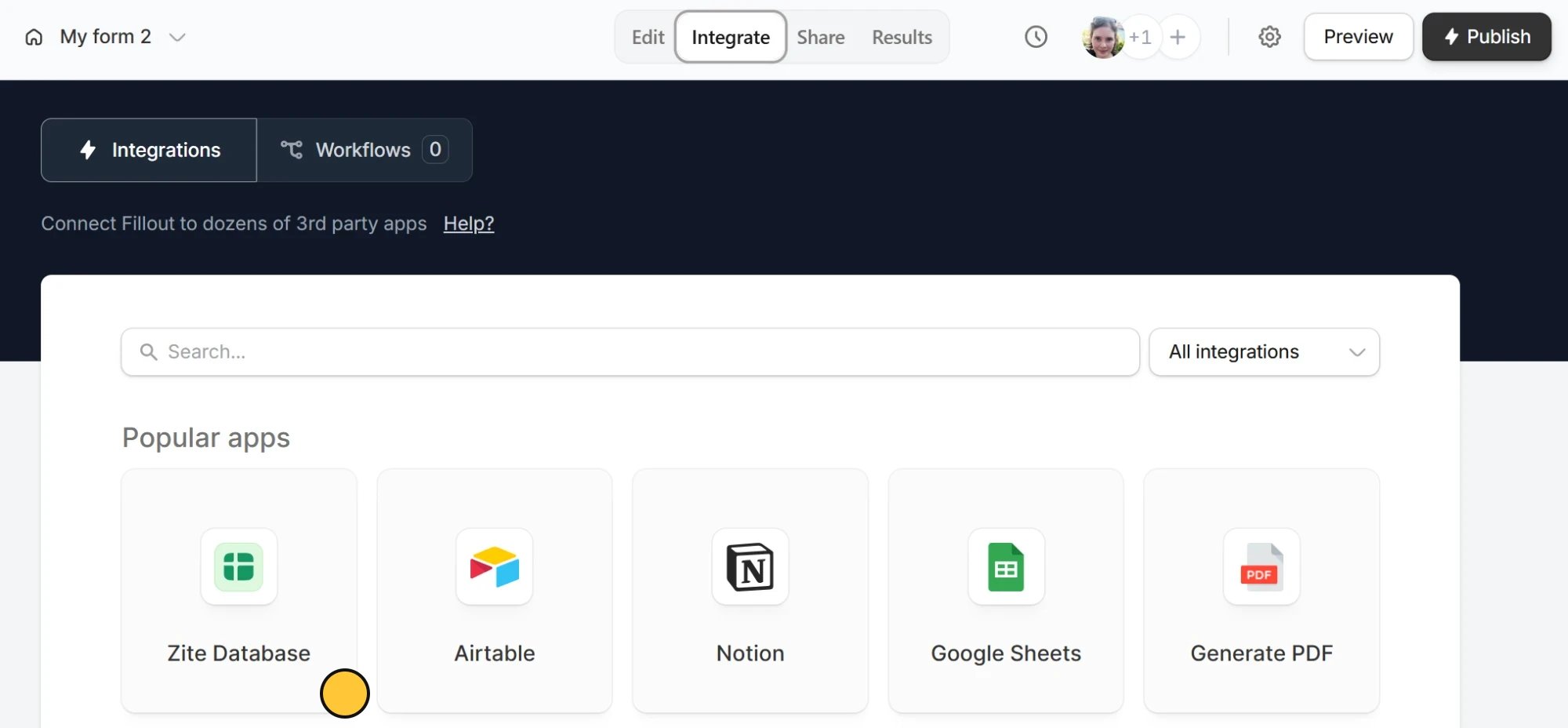
Integrate tab at the top. Select Zite Database from the list of integrations.Results on top followed by Link to database.A form can only connect to one database and table at a time. However, Google Sheets is an exception because each new connection creates a new sheet.
2
Choose database option
Pick New database to create a fresh database for this form, or use an Existing database.A new database gets its own Zite workspace, named after the form (for example, My form database). It shows under Workspaces in the side menu. Fillout copies any responses you already have into the database first.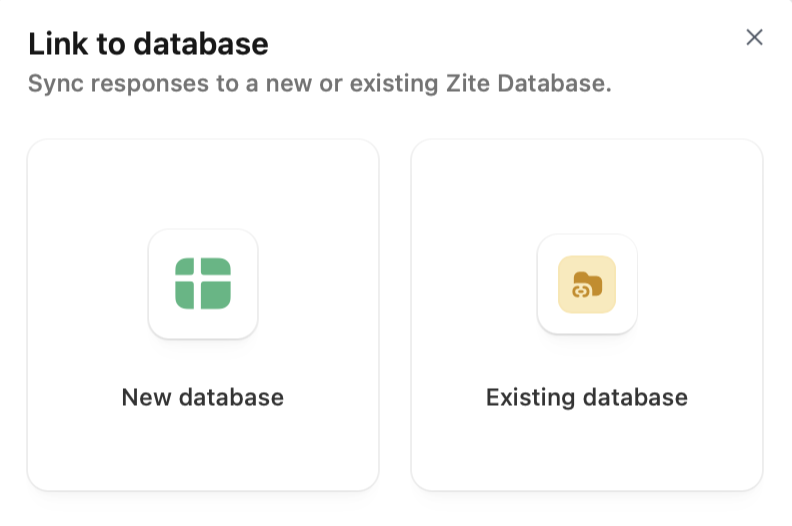
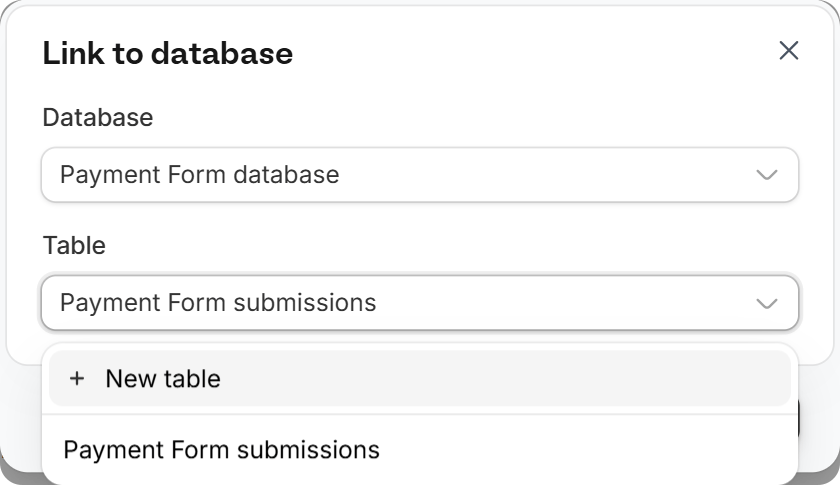
+ New table to create a new one for this form.If you pick a table that already exists, click Continue to see how your form’s fields map to its columns. Click Edit mapping to change them, then Continue.3
Publish your form
Once you see Database linked successfully, click 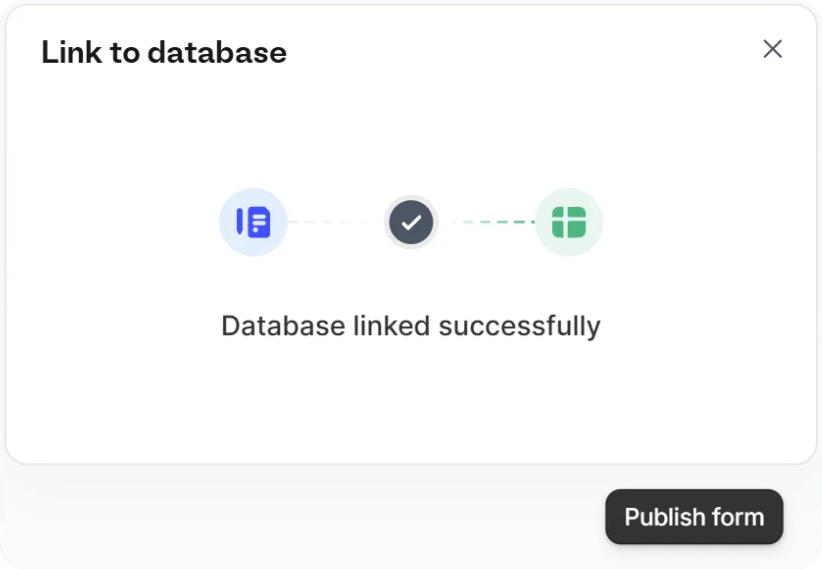
Publish form.4
View your data
Your form is now linked to a database. You can view responses in two places:
- From your form: Click the Results tab at the top where you can update or edit responses.
- From the database: Open the Zite workspace and click Database. Each response is a record in the table you picked.
When a scheduling form creates a new table, the table also gets columns for each booking: the time, guests, meeting link, and host.
Linking multiple forms
You can connect multiple Fillout forms to the same Zite database. All submissions from connected forms are stored in one place, making it easier to:- Combine related form submissions
- Create unified dashboards
- Streamline data management
Who can edit a form that saves to a database
Access to a form comes from its owner, its Fillout workspace, and the people it’s shared with. Access to a Zite workspace doesn’t give access to the forms that save to its database. To edit a form that saves to a Zite database, you also need edit access to that database. Without it, the form opens read-only. You only see Share and Results, with the message You can’t edit this form. It saves to the [database name] database. Ask for edit access to that database to edit the form. Organization admins can always edit. The Open database button in Results and the View in Zite Database link on each submission only show to people who can open the database. To fix this, either:- Ask an organization admin, or anyone who can edit the database, to add the person as an editor of the database’s Zite workspace (open the workspace, then Users), or
- Have someone who can edit both the form and the database remove the database link from the form’s Integrate tab
Disconnect a form from its database
Disconnecting stops new responses from being saved to the database.1
Open the Integrate tab
Open your form and click Integrate at the top. The database is shown under Your connections as Zite Database.
2
Delete the integration
Click the three dots on Zite Database, then Delete integration. In Delete integration?, click Yes.
3
Publish your form
Click Publish to save the change.
- The table icon next to the form goes away
- New responses are no longer saved to the database
- The database, its Zite workspace, and the past submissions in it aren’t deleted. Delete them from Zite if you no longer need them.
- Past responses stay on the form’s Results page
Build a form from your database
If you already have a Zite database, you can build a form that saves to one of its tables.1
Create a form
In the side menu, under Fillout, open My forms or a Fillout workspace and click New form. Then, choose Blank form.
2
Link the database
From the form’s Integrate tab, link the form to your Zite database and choose your table.
3
Add your fields
In the form editor, the Existing fields tab in the left-hand panel lists the columns in your table. Drag them into your form. If you delete a field from your form, it goes back to the Existing fields tab.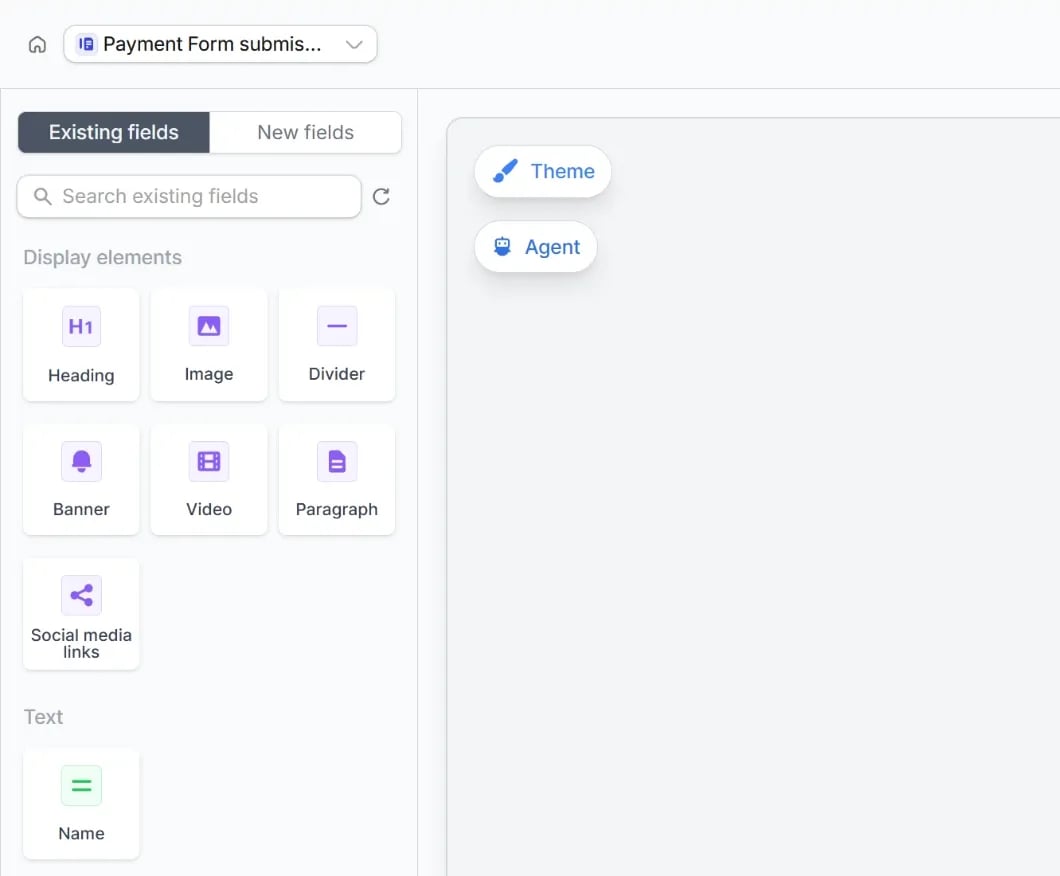

Add new fields
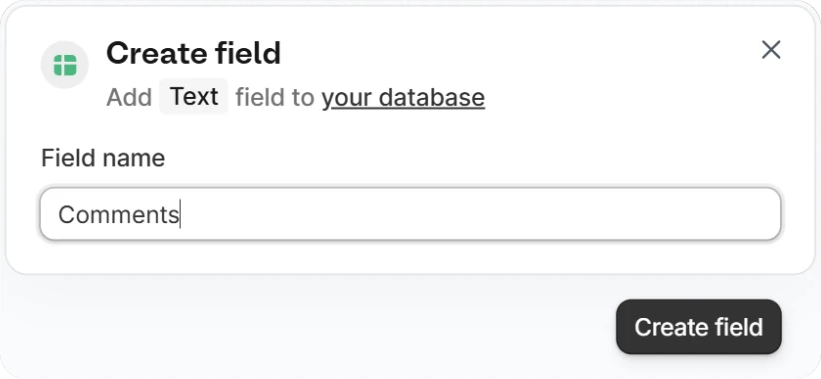
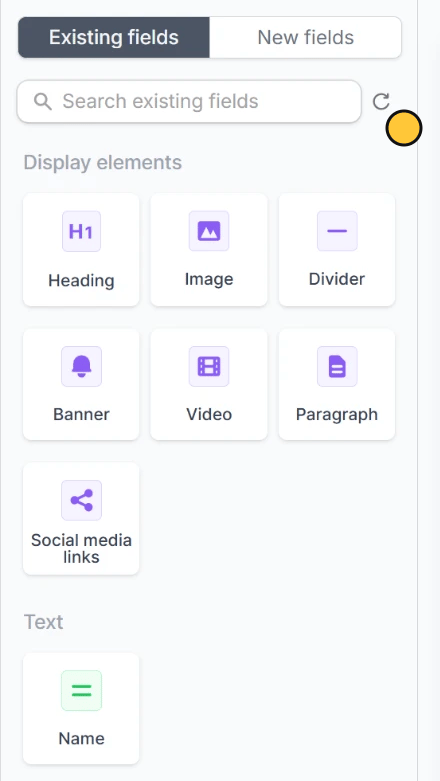
In theNew fields tab, click a Fillout field. In the Create field dialog, enter a Field name for the column that will appear in your Zite database, then click Create field.Existing fields tab, and click the refresh icon . Then, drag the new field into your form.Storage limits
These limits depend on your Zite plan, not your Fillout plan. Total attachment storage refers to the cumulative amount across all databases within an organization.
Size limits use decimal units, so 1 GB = 1,000,000,000 bytes.
Once a Fillout form is connected to a Zite database, each stored submission counts toward your Zite database record limit. If the form isn’t connected to a Zite database, submissions only count toward your monthly Fillout form submission limit.
For the size of files that respondents upload through a form, see the file upload limits, which follow your Fillout plan.
Files uploaded through a linked form are also copied into the database, so each record keeps its own copy, even if the submission is deleted. These copies count toward your total attachment storage. Records saved before 29 October 2026 link to the form’s file instead. See File storage.
What happens next
Once linked, every form submission creates a new record in your database. You can:- View and edit responses directly in the database
- Add internal fields that aren’t collected through your form
- Enrich database records with custom fields, internal notes, and statuses
- Build apps on top of your form data
- Use the REST API to access your responses programmatically
Form responses sync instantly to your database. Any changes you make in the database won’t affect the original form submission.
Common use cases
By connecting Fillout with Zite Database, you can build workflows for things like:- CRM Systems: Manage leads, contacts, and customer interactions in one place
- Project Management: Track tasks, progress, and deadlines across teams
- Event Registration: Collect, organize, and update attendee information in a database
- Inventory Tracking: Monitor stock levels, updates, and product movements in real time
- Client Portals: Let users view and update their own records securely through forms
- Feedback Collection: Centralize responses and analyze them using views and formulas
Related articles
Update with forms
Edit existing Zite database records with a Fillout form.
Map columns
Send values to your Zite columns from a Fillout form.
Pre-fetch Records
Fetch data from your Zite database to pre-fill your Fillout form.