

How Fillout Scheduling Works
Fillout Scheduling forms let people book available slots on your calendar while ensuring the time works for you. The forms show a calendar, meeting details, and organizer info by default.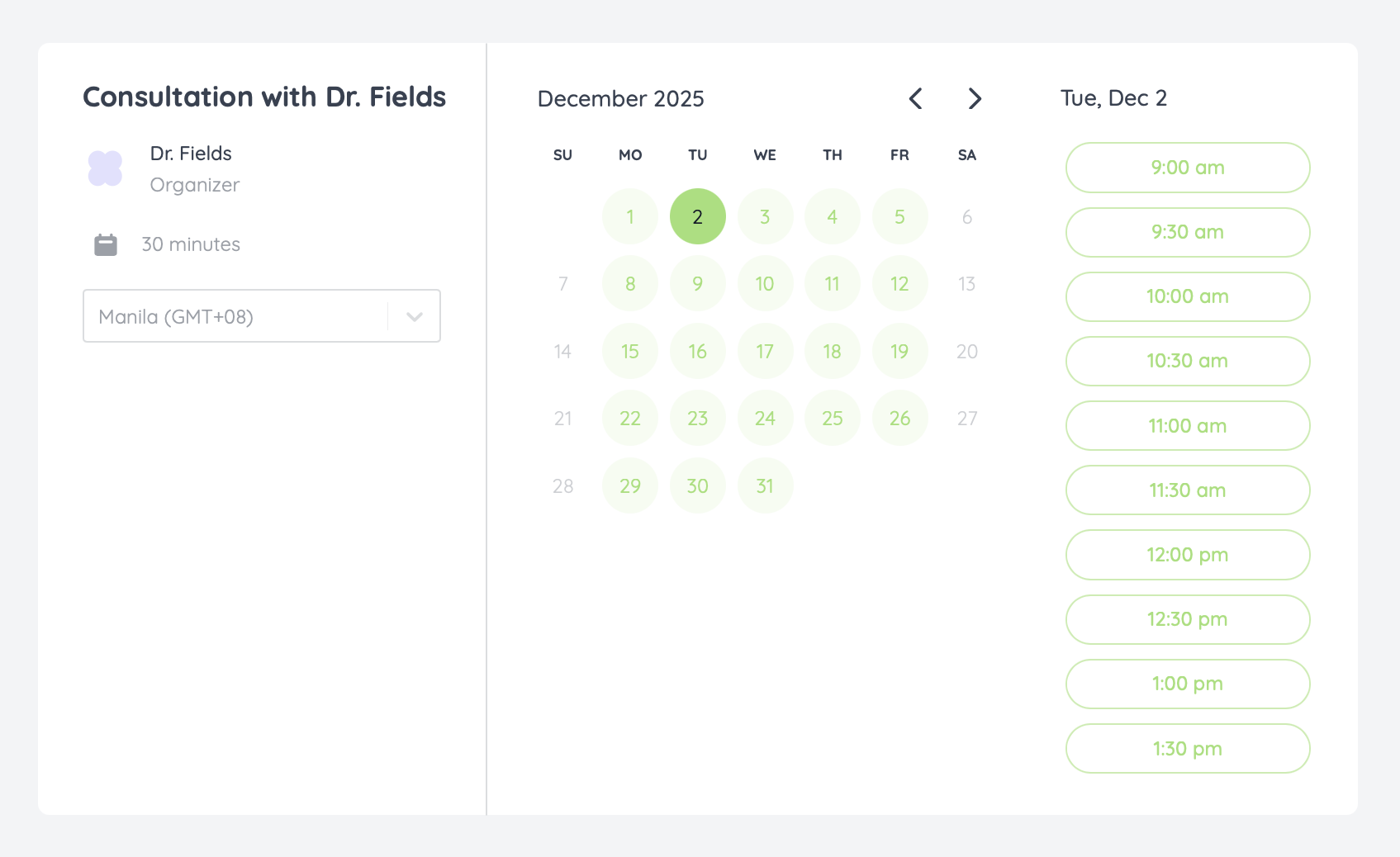
Respondents can select their timezone to view slots in local time.
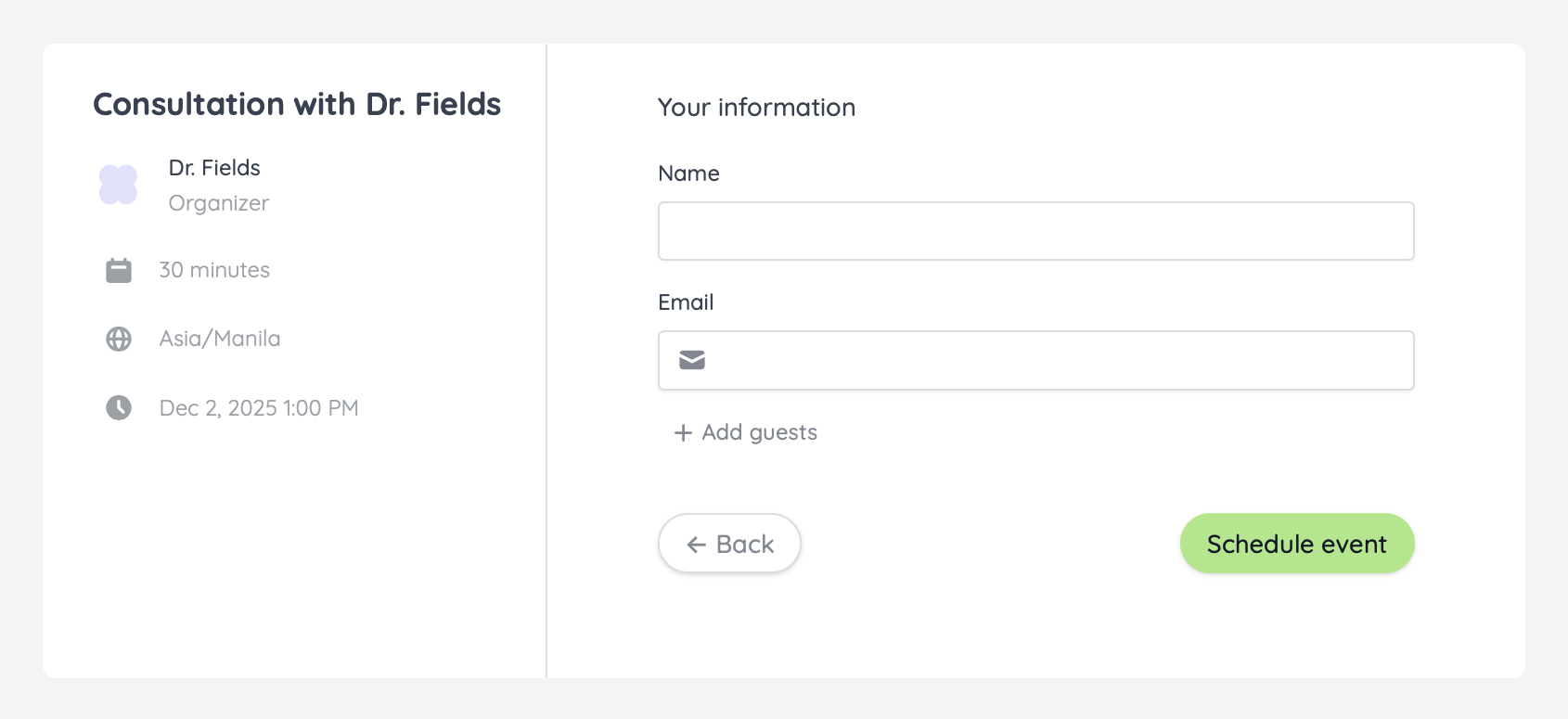
Time zones in email notifications
- For invitees: Invitation emails show the date and time in the invitee’s time zone, in both the subject and body
- For hosts: Booking notification emails show the invitee’s time zone, not the host’s. Cancellation and reschedule emails show the time in the host’s calendar time zone
How to set up
1
Create a scheduling form
Click Scheduling under Fillout in the left sidebar of your dashboard. Then, click + New scheduling form.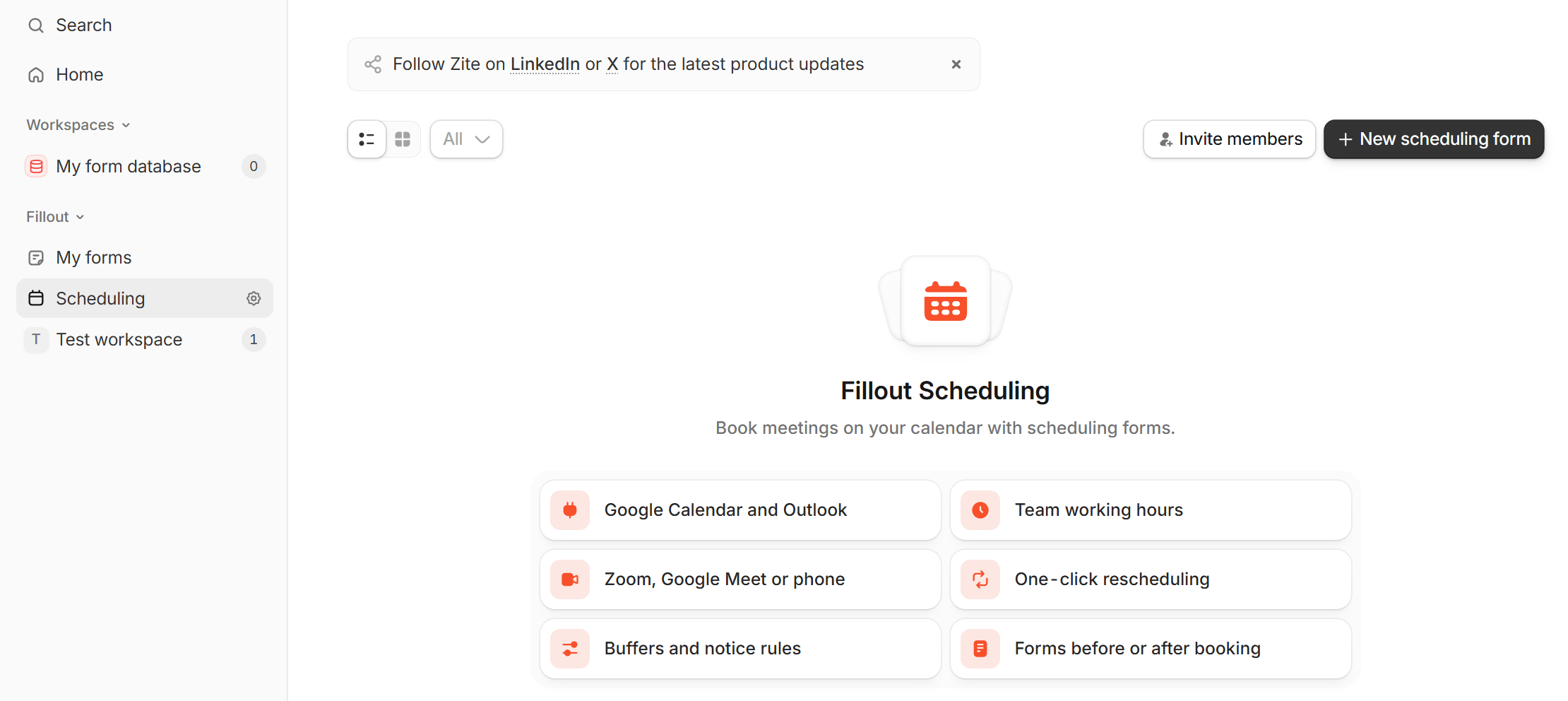
2
Connect your calendar
If you haven’t connected a calendar yet, you’ll be asked to connect your Google Calendar or Microsoft Outlook account first.Once a calendar is connected, you can manage your calendars and availability anytime. Hover over Scheduling under Fillout in the left sidebar and click the settings icon .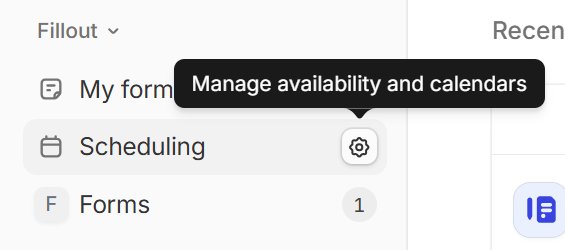

Fillout Scheduling syncs availability across all connected calendars.
3
Choose a meeting type
Choose your preferred meeting type.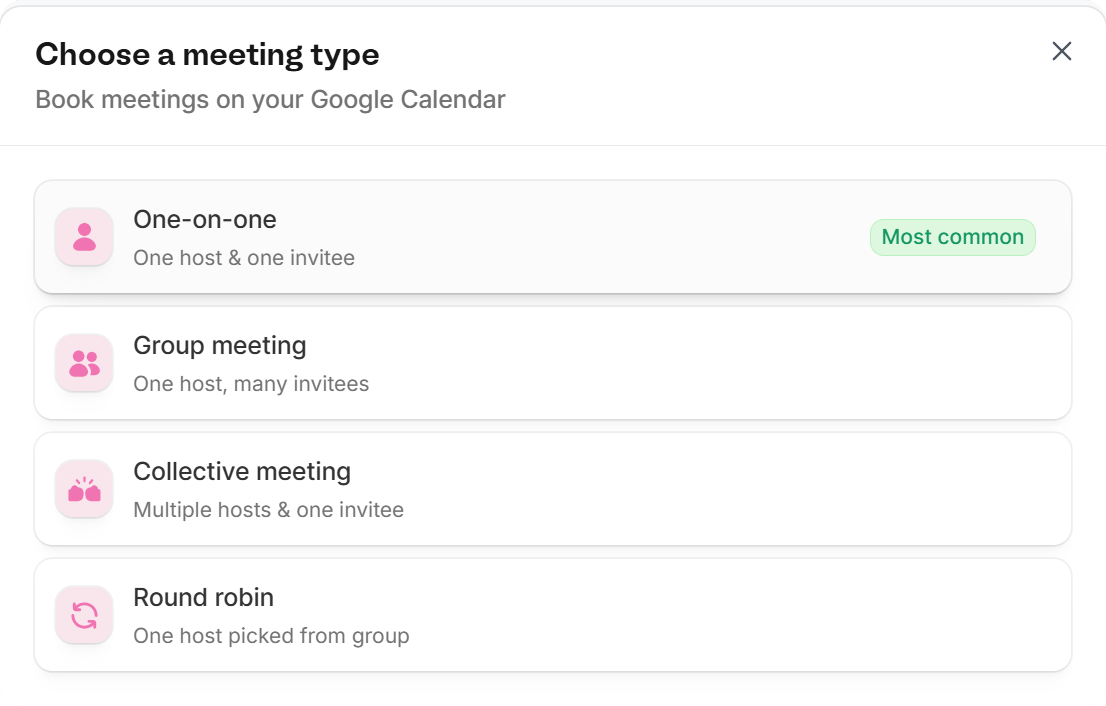
4
Configure event details
Add your meeting details, and optionally + Add meeting location to include a physical location, phone number, or a Google Meet or Zoom link for the meeting.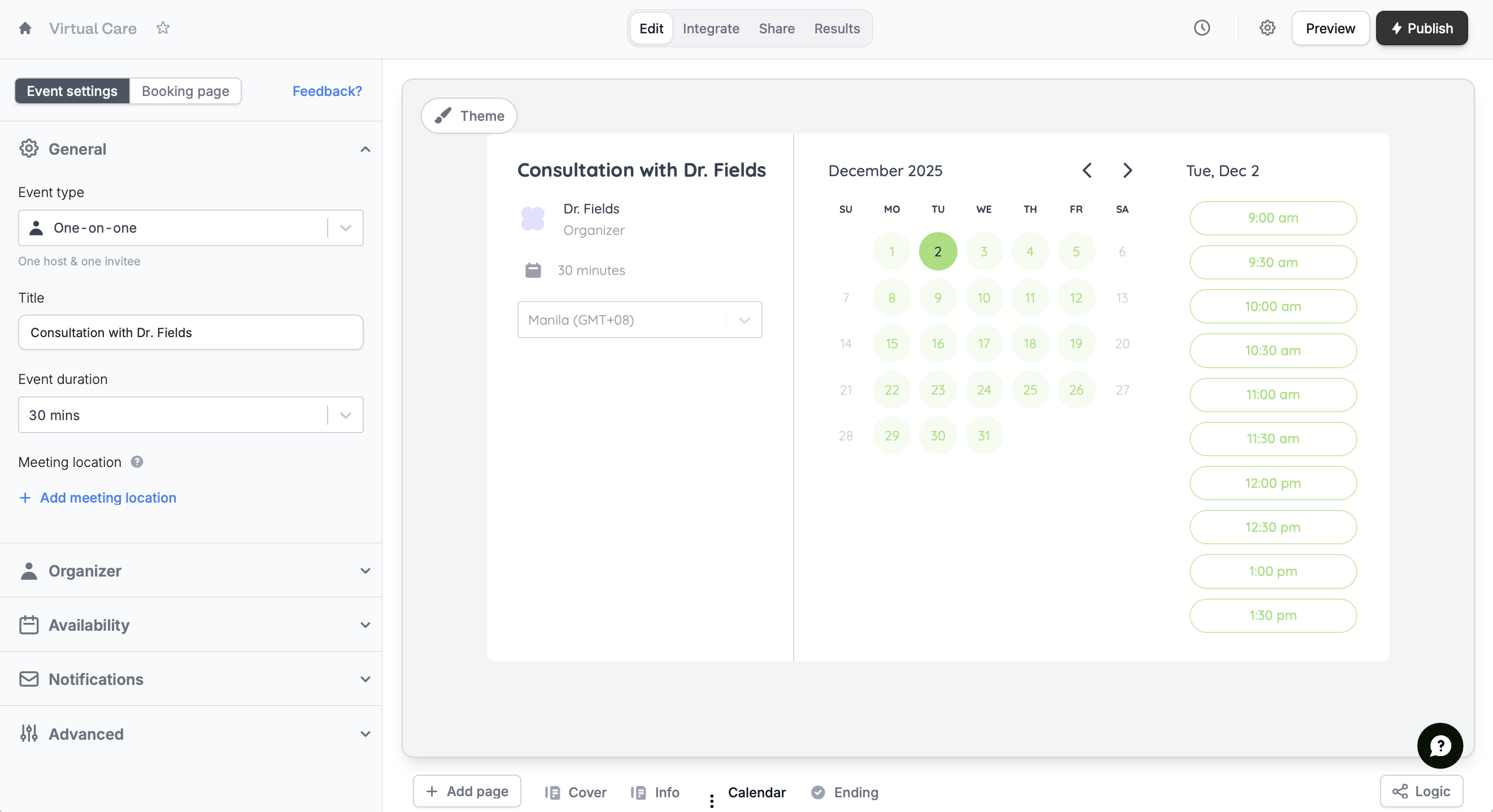
- Availability - choose a calendar, set your working hours (the default is 9 AM–5 PM, Monday to Friday, but you can adjust them to any time), add a minimum notice period, set buffer times, and limit bookings per day
- Notifications - send a customizable automated email reminder
- Advanced - customize Google Calendar event details, time increments, and share link
5
Customize the style
Go to Theme to edit your form’s design. You can even change your avatar to your logo to match your brand and edit the button label.
6
Publish and share
Publish your form and share the link or embed it anywhere.A booking made in Preview is a real booking. It adds the meeting to the host’s calendar, sends the invitee a calendar invite and runs your workflows. Cancel test meetings afterwards.
Add a calendar to a standard Fillout form
Fillout’s core form editor also includes an option to add a Scheduling page to any form. Open an existing form, and click + Add page at the bottom, then Scheduling.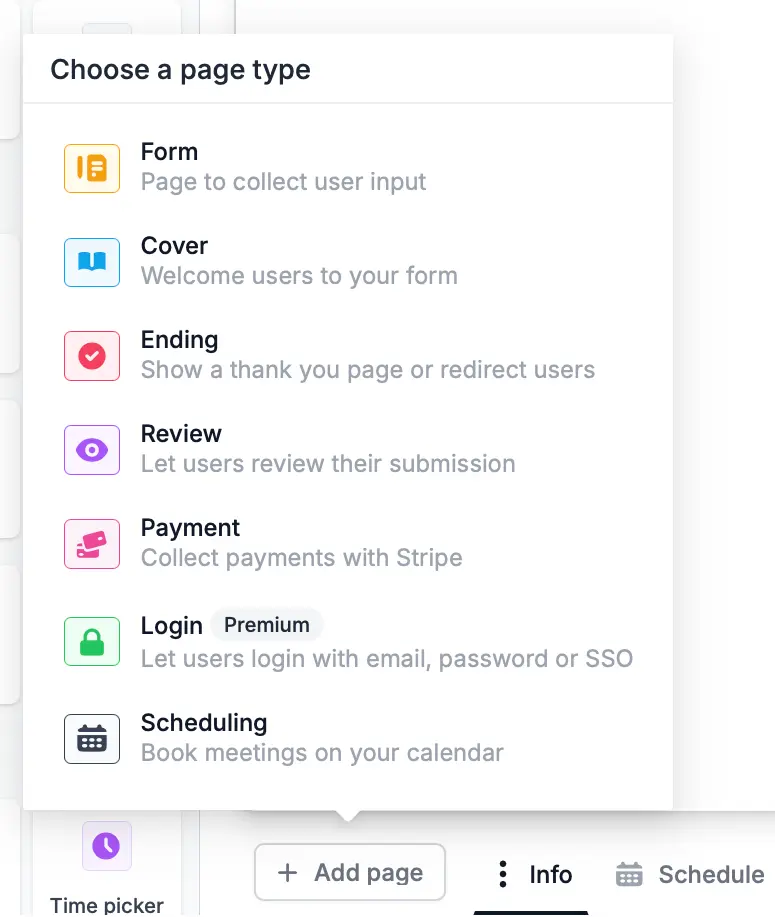
Related articles
Event types
Select the event type that best fits your agenda.
Set your availability
Specify your available hours and buffer times through forms.
Style scheduling form
Tweak your form’s design, link, and avatar to match your brand.